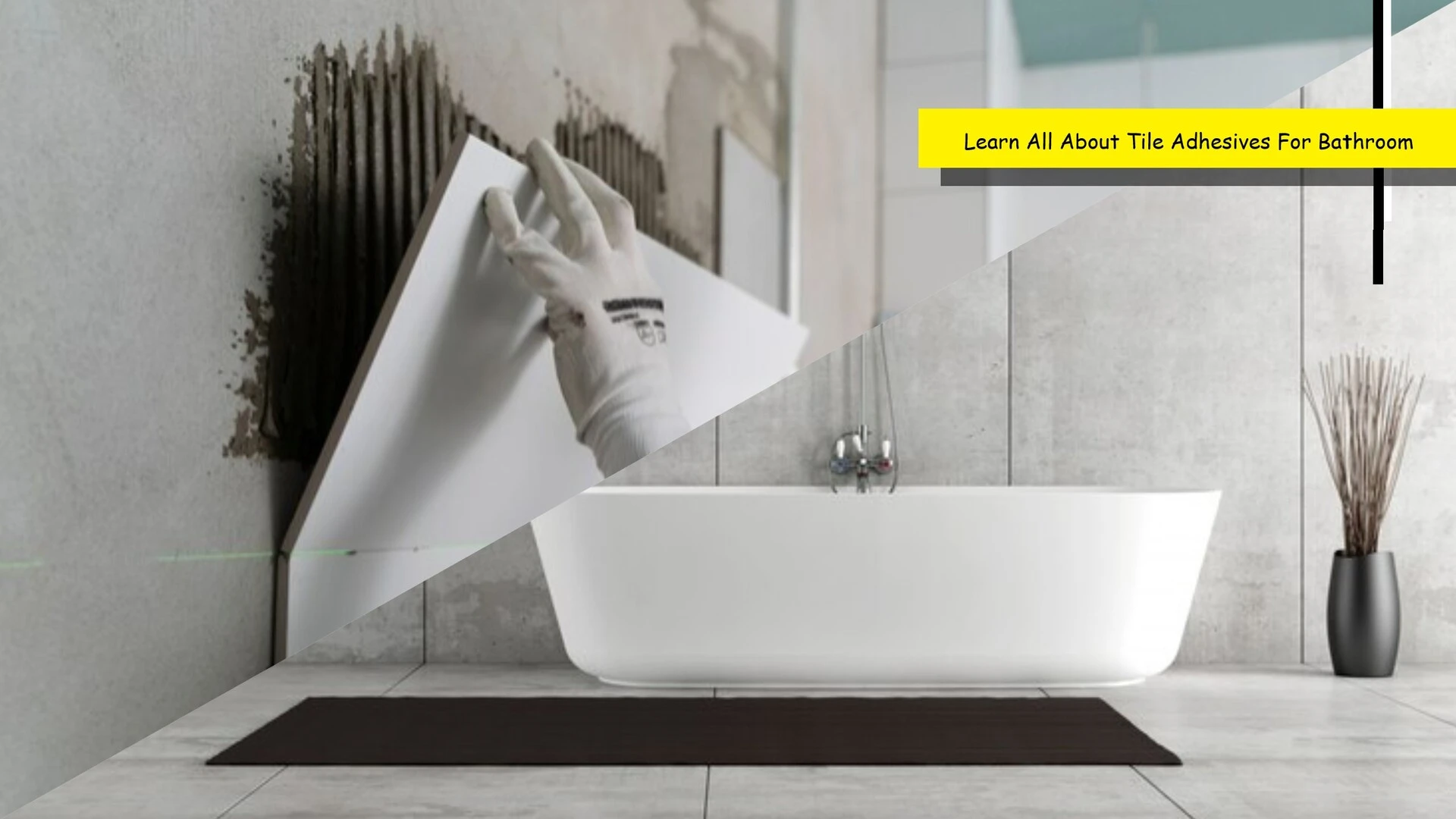
Factors To Consider Before Choosing a Bathroom Tile Adhesive
Substrate Compatibility
Substrate refers to the surface or underlying material on which the tiles are being installed. It plays a crucial role in determining the success and longevity of your tile installation.
Different types of substrates require different types of adhesives. Using the wrong adhesive can lead to various issues such as poor bonding, cracked tiles, or even tile failure. It is important to ensure that the adhesive you choose is compatible with the substrate you are working with in your bathroom.
Environmental Factors
As mentioned earlier, bathrooms are high-moisture environments. They often have high humidity levels, which can cause moisture to seep into the adhesive and weaken its bond which can result in popping up of tiles. Therefore, it is crucial to choose a bathroom tile adhesive that is moisture-resistant or suitable for wet areas which helps withstand constant exposure to water without deteriorating or losing its bonding properties.
Type Of Tile
The type of tiles you plan to use in your bathroom is another one of the crucial factors to consider when choosing the right adhesive. Different types of tiles, such as ceramic tiles, porcelain tiles, vitrified tiles, artificial tiles, or natural stone tiles, may require different adhesives.
Size Of Tile
When considering the size of tiles, it's essential to note that larger tiles tend to have a higher degree of warpage. Consequently, the adhesive needed for larger tiles is also greater, making size a crucial factor to take into account. Let's examine which tile adhesives are appropriate for bathroom tiling and assist you in selecting the most suitable bathroom tile adhesive for specific tiles.