Compare 3 Types of Waterproofing| Types of Liquid Waterproofing
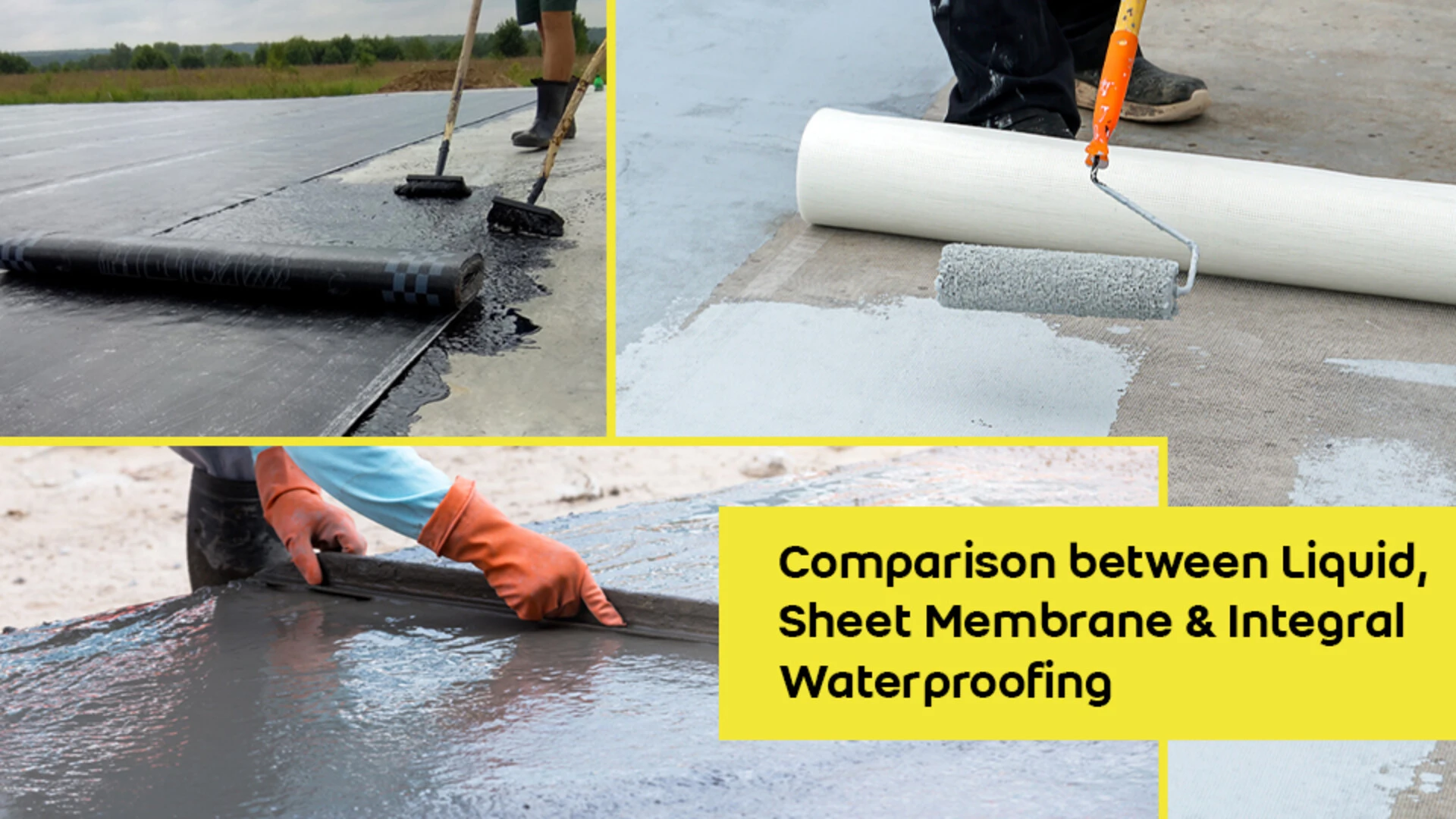
Compare the 3 types of waterproofing solutions.
Three primary methods are commonly used: liquid waterproofing, sheet membrane waterproofing, and integral waterproofing. This comparison is focused on liquid waterproofing, which includes materials like cementitious, acrylic, polyurethane (PU), bitumen, and epoxy. These various options offer distinct features and applications. An understanding of these differences is essential for informed decision-making in construction and maintenance projects.
Advantages | Disadvantages | |
Sheet Membrane | Controlled, Guaranteed uniform thickness | Challenging and requires skill for installation
|
Robust, self-reinforced | Complex detailing | |
No mixing or specialized equipment for application | Requires skilled labor | |
Trafficked immediately | Joints can be a potential weakness | |
Difficult to install at detailing | ||
Liquid Applied | Seamless | Variable thickness |
Good in complex geometries | Mixing and application equipment required | |
Quick coverage with spray application | Longer Cure time with multiple coat requirements | |
Requires good surface preparation | Robust system for all areas
| |
Integral | Easy to use along with concrete | Misproportion leads to failure |
Also read other blogs on how to choose right waterproofing & FAQ's on waterproofing.
Types of liquid-applied systems of waterproofing with Basic descriptions
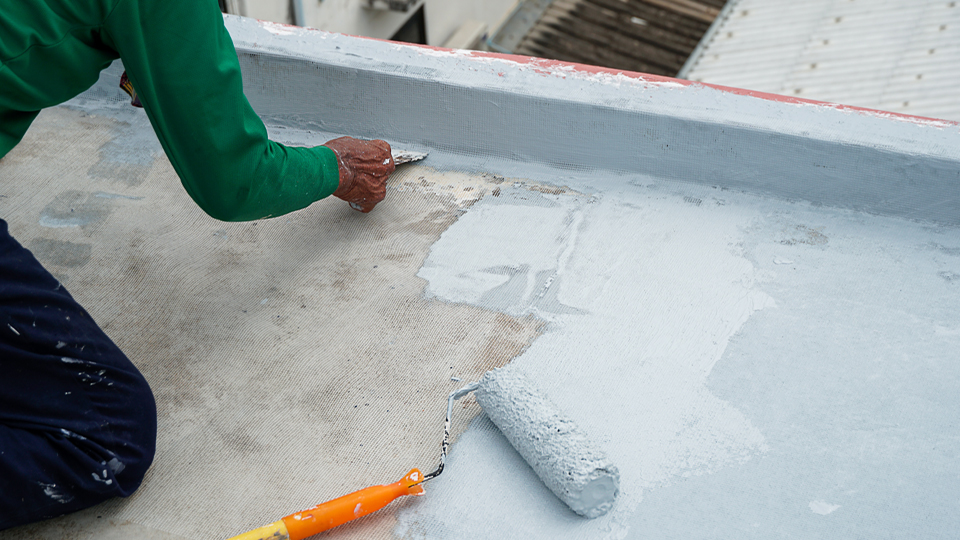
When it comes to liquid applied waterproofing there are around 9 systems, These systems are based on their chemistry and application areas as well as surface conditions. Here is the specified information about each system of liquid-applied waterproofing.
Cementitious
Cementitious waterproofing systems are composed of a mixture of cement, sand, and specific additives. They form a durable, rigid or semirigid membrane when applied to surfaces such as concrete, masonry, and cementitious substrates. Cementitious systems provide excellent resistance against water penetration and are commonly used for balconies. They can also be applied as a coating to swimming pools as well as water tanks. For best results of cementitious waterproofing, you can go for Waterseal 321, waterseal 221 and waterseal 121, moistseal, waterguard
Acrylic
Acrylic waterproofing systems consist of a water-based mixture containing acrylic polymers. They offer excellent flexibility, durability, and UV resistance. Acrylic systems can be applied to various surfaces, including concrete and drywall. They are commonly used for roofs, terraces, and external walls, providing reliable protection against water infiltration. If you are looking for an acrylic waterproofing solution you can simply go for Weberdry acr seal
Hybrid PU
Hybrid PU (polyurethane) waterproofing systems combine the benefits of polyurethane and other polymers. These systems exhibit exceptional elasticity, durability, and chemical resistance. Hybrid PU systems are suitable for various applications, including roofs, balconies, terraces and podium decks. For reliable waterproofing solutions with long-term performance and ease of application go for weberdry PUA seal.
PU
PU (polyurethane) waterproofing systems are known for their exceptional flexibility, elongation properties, and crack-bridging capabilities. They offer excellent resistance against water, chemicals, and UV radiation. PU systems can be applied to a wide range of surfaces, including concrete, metal, and wood. They are commonly used for roofs, terraces, balconies, and wet areas such as bathrooms and kitchens. Weberdry PUR Basic, PUR seal, PUR seal aqua, PUR seal 2K will the ideal choice for PU based waterproofing.
Pitch modified bitumen
Pitch modified bitumen waterproofing systems utilize bitumen as the primary material, modified with additives such as polymers and resins. These systems offer excellent waterproofing properties and are highly resistant to Soil microbial resistance property. Pitch modified bitumen systems are commonly used for flat roofs, undertile, foundations, and basements, providing reliable protection against water infiltration. One can easily go for weberdry Bitseal PU to achieve the best results of pitch modified bitumen waterproofing solutions.
Epoxy
Epoxy waterproofing systems are formulated with epoxy resin and curing agents. These systems offer high strength, durability, and resistance to water and chemicals. Epoxy systems are commonly used for applications such as concrete structures, water tanks, and containment areas where exceptional chemical resistance is required.
Bitumen
Bitumen waterproofing systems utilize bitumen, a petroleum-based material, to create a reliable waterproofing membrane. Bitumen systems are known for their excellent water resistance, flexibility, and adhesive properties. They are commonly used for roofs, foundations, and below-grade applications, providing durable protection against water infiltration. Try weberdry PUR bitumen best possible results.
Weber offers an extensive range of waterproofing chemicals and products that have been specially designed to cater to the diverse waterproofing requirements of different areas within a building, ensuring comprehensive protection. Whether you need to safeguard your home or any commercial space, our waterproofing product range has you covered. From foundations and basements to car parking areas, podiums, lift rooms, and walls, our waterproofing solutions are meticulously crafted to provide quality, durability, and sustainability. weberdry ACR seal is a ready-to-use liquid, weberdry PUA seal is an outstanding single-component polyurethane-based hybrid waterproofing membrane suitable for both indoor and outdoor applications, and weberdry PUR bitumen is our bituminous waterproofing membrane, ideal for retaining walls, foundations, and under-tile waterproofing systems. No matter what your specific needs are, we have the right solution for you