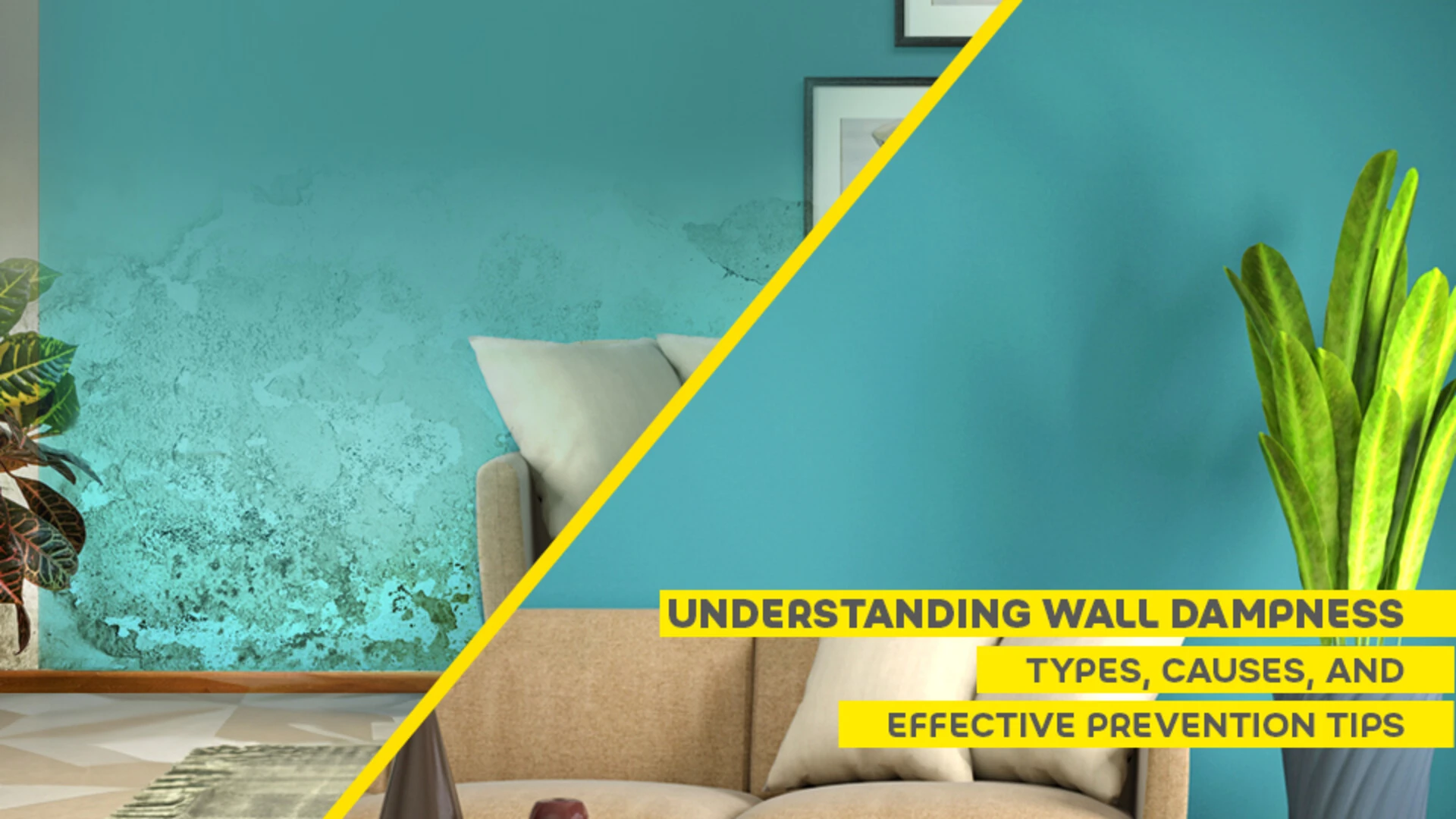
Understanding Wall Dampness: Types, Causes, and Effective Prevention Tips
Wall dampness is a common problem in many homes. It causes damp ugly stains and bad smells, and it will eventually damage the structural components of your house if you don't fix it. Knowing what dampness is, the different types, and how to stop it can help you keep your home healthy and comfortable.
What is Dampness and Its Types?
Dampness is the presence of unwanted moisture in the structure of a building. It typically manifests as patches of wet or moist areas on walls, or ceilings. There are various types of dampness, each with its own qualities and causes:
Rising Damp: This happens when moisture from the ground rises up through the walls. It often results in tide marks on walls and can damage plaster and paint.
Penetrating Damp: Water infiltrates through walls from the outside face of the wall, and penetrating damp often leads to damp patches on walls and ceilings. It can be due to faulty roofing, damaged brickwork, leaking gutters or plaster cracks in the wall.
What Causes Dampness on Walls?
Dampness on walls appears because of several factors:
Poor Ventilation: Insufficient airflow can lead to condensation, especially in bathrooms and kitchens where humidity levels are high.
Structural Issues: Cracks in walls, roofs can allow water to seep into your home, causing penetrating dampness.
Faulty Plumbing: Leaking pipes and overflowing water tanks can introduce moisture into walls, leading to damp patches.
Ground Water: Rising dampness is often caused by groundwater moving upwards through the building's structure due to the lack of an effective damp-proof course.
Weather Conditions: Heavy rainfall and prolonged wet weather can worsen existing issues or introduce new sources of moisture.
How to Stop Dampness on Walls
Preventing and managing dampness involves a combination of good waterproofing and other measures:
Improve Ventilation: Ensure your home is well-ventilated by opening windows regularly and using extractor fans in moisture-prone areas. Dehumidifiers can also help reduce indoor humidity levels.
Repair Structural Damage: Address any cracks or damage to your walls, roof, or foundation promptly. Ensure your gutters and downpipes are clear and functioning properly to divert water away from your home.
Waterproofing: Use the highest-quality waterproofing solutions to prevent rising dampness.
Effective Waterproofing Solutions
To effectively protect your walls from dampness, consider using the following top-notch products from Saint-Gobain Weber:
Weberdry Moistseal: This is a flexible waterproofing slurry that provides excellent protection against water penetration. It is ideal for both interior and exterior wall waterproofing, ensuring a long-lasting barrier against moisture. Weberdry Moistseal is easy to apply and highly effective in penetrating damp from negative side of walls.
Weberdry ACR Seal: This acrylic-based waterproofing solution is perfect for protecting roofs and external walls from water damage. It forms a durable, elastic coating that resists UV rays and weathering, ensuring your walls stay dry and safe from dampness in all weather conditions.
Weberdry PUA Seal: This polyurethane waterproofing membrane is designed for areas that require a highly elastic and tough waterproofing layer. It is suitable for terraces, balconies, where high-performance waterproofing is essential. Weberdry PUA Seal offers excellent adhesion and long-term protection against water infiltration even exposed conditions.
By using these advanced waterproofing products, you can ensure your home is well-protected from the damaging effects of dampness. Understanding the causes and types of dampness, and taking proactive steps to address them, will help you maintain a healthy and comfortable living environment. Remember, early intervention is key to preventing serious damage and keeping your home in great condition.